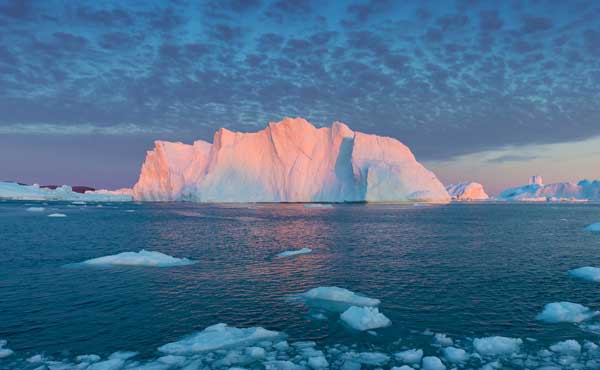
The Arctic is home to a surprising variety of wildlife, much more than you might expect. Of course there are the iconic species, the ones we're all familiar with, but there's so much more to this near pristine wilderness. There are also more types of habitat than might be immediately apparent. Although it's a landscape dominated by ice, the intricate ecosystems support plants, invertebrates, birds and mammals.
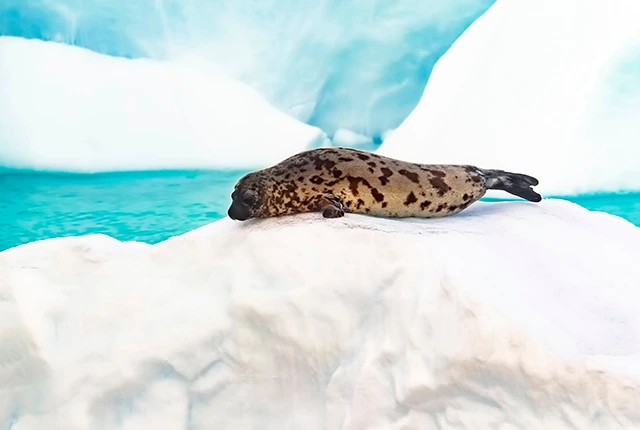
We've all heard of the iconic species such as polar bear, walrus, Arctic fox, reindeer, Arctic hare, ringed seal, beluga whale and maybe musk ox, snowy owl and Arctic tern. However, there are some lesser-known species such as ivory gull, bowhead whale, narwhal, Arctic wolf, hooded seal and even Greenland shark.
The sheer diversity of life in this inhospitable world is quite staggering and the wildlife encounters are something to behold.
Mammals of the Arctic
There are a few mammals that are synonymous with the Arctic. Polar bears are probably one species that everyone is familiar with, while the Arctic fox and walrus are particularly well known, but there's a little more than one might expect found within the Arctic circle.
Polar bears
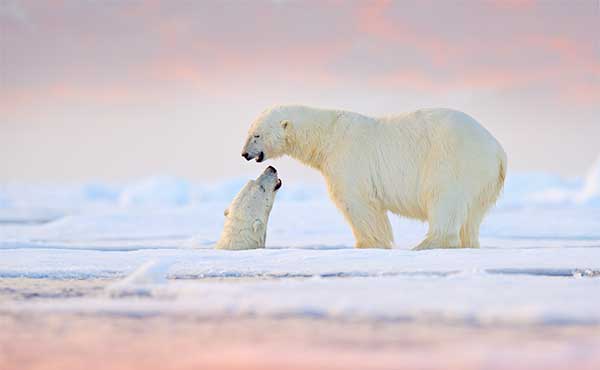
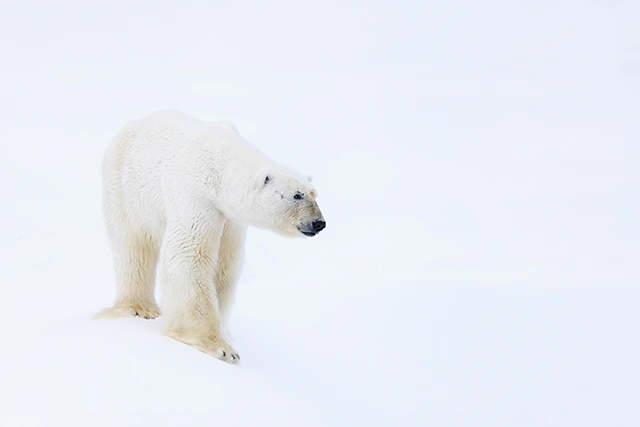 The most formidable predator in the Arctic, the polar bear is a true specialist of Arctic environs. Bizarrely, polar bears are considered to be the largest land predator, while also being classed as a marine mammal. They've adapted to live in the Arctic, with hollow fur (perfect insulation) and a layer of blubber keeping them warm, while large feet help them swim huge distances - up to a few hundred kilometres.
The largest of all bear species, the polar bear is strictly carnivorous and preys on a numbers of Arctic wildlife species, with a particular focus on several seal species such as ringed, harp and bearded seals. They may also occasionally predate walrus, beluga whales and even reindeer, while scavenging from bird nests may occur when times are hard.
Polar bears can be found across the frozen Arctic and as far south as the southern shores of Hudson Bay in Canada. There are thought to be distinct populations of bear across each area of the Arctic, with specific denning sites each winter, where the females give birth to their cubs.
I've been to the Arctic several times to photograph polar bears, and have written an article about polar bears in Svalbard, including tips on how to see and photograph them.
Walruses
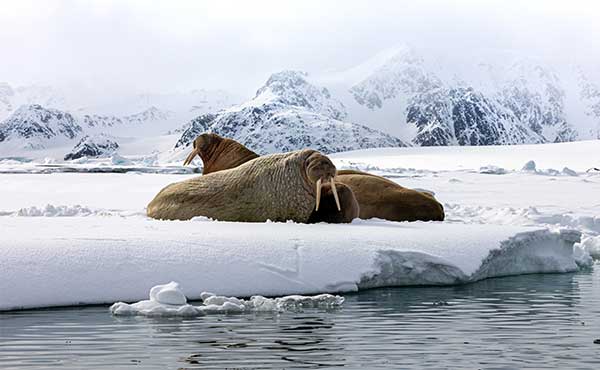
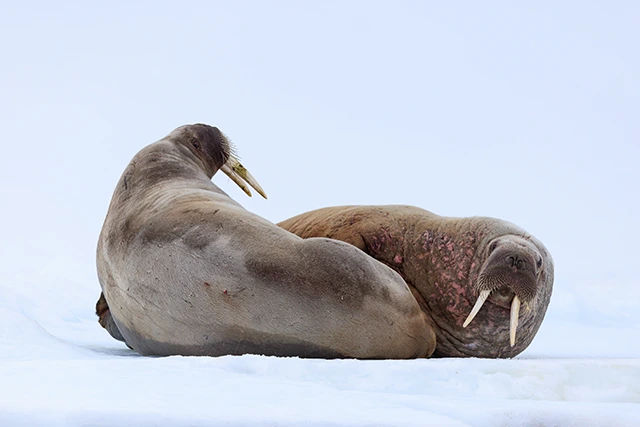 The walrus is the largest member of the pinniped family in the Arctic and can be found in two separate populations - in the Atlantic (which includes Hudson Bay & the Northwest Passage) and Pacific. The walrus is known to live for up to 40 years.
Walruses are famed for their large tusks, which are typically much larger in males than in females. Once hunted heavily for this ivory, the population is now starting to recover and in areas such as Svalbard, walruses are no longer afraid of predation by man. Their tusks are mainly used for display, but can be used to help them haul out on the ice, while males will use them when fighting.
Walrus feed almost exclusively on molluscs, using their vibrissae (whiskers) to locate their prey buried in the sediment on the sea floor. Typically, due to their size, polar bears leave walrus alone, but it isn't unheard of them to attack young walrus.
Beluga whales
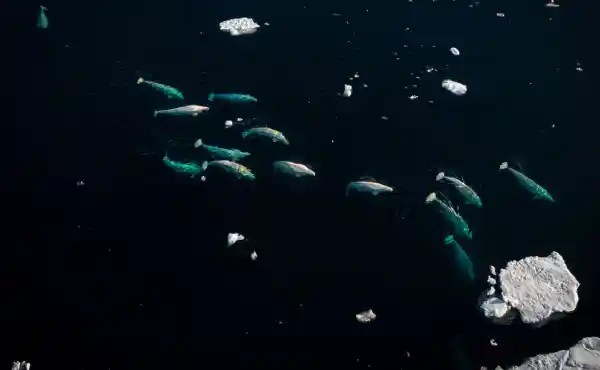
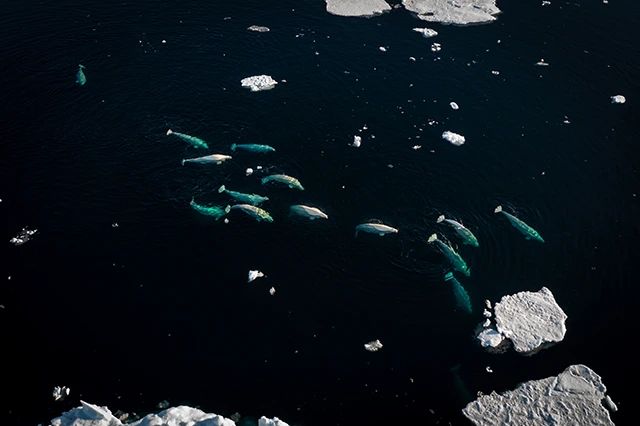 The beluga, often referred to as the white whale or the sea canary, is a member of the dolphin family, and a true Arctic specialist. They're famous for their 'white' colouration and spend much of their time feeding along the ice edge across the frozen seas of the north. It's called the sea canary because of its incredible range of songs and high-pitch whistles.
The beluga, unusually for a cetacean, has no dorsal fin, helping it navigate through an ice-laden ocean and it has an unusually large head. This bulge is used for its powerful echolocation abilities, further assisting with navigation and finding food.
A particularly social species, you would expect to see pods of beluga together. However, they're easily disturbed and avoid contact with people wherever possible.
Arctic foxes
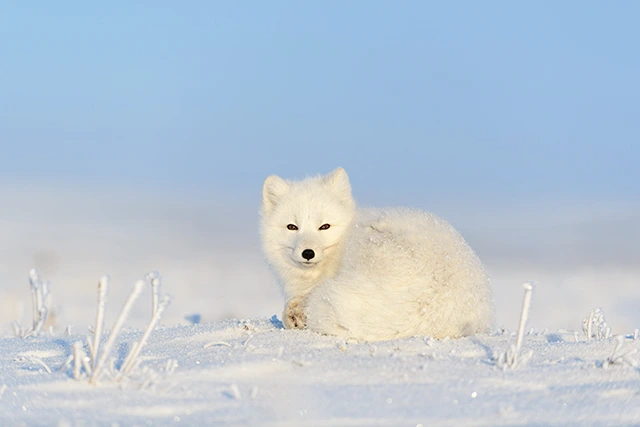 One of the most widespread of all polar specialists, Arctic foxes are found across all areas of the Arctic regions and even inhabit areas outside of the Arctic circle where conditions allow (including Iceland). These small, but hardy species are true masters of the inhospitable conditions of an Arctic winter, often scavenging on polar bear kills, while making the most of the short summers to fatten up and store food for the harder times ahead. Although Arctic fox are land animals, they've been known to cross open ocean, admittedly on the sea ice, with one individual making the journey all the way from Svalbard to the Canadian Arctic.
In winter, the Arctic fox is known for its incredibly thick white coat, while in the summer months, they typically have a brown and cream coat. There are some individuals, typically referred to as blue morphs, which have a dark brown coat throughout the year. These are often found in coastal environs where sea ice rarely forms.
Although the high Arctic is where you typically find these charismatic mammals, their range extends south in areas where there is suitable prey and a lack of competition from red foxes.
Bearded seals
 One of the most commonly seen species of seal in the Arctic, these large members of the seal family have a preference to haul out on ice floes. Weighing up to 400 kilogrammes, for a particularly large individual, bearded seals can be found anywhere where seasonal sea ice forms, across the Arctic Ocean and beyond.
Living up to 30 years, bearded seals are long-lived and form a crucial part of the delicate Arctic ecosystem. They primarily feed on a number of molluscs, crustaceans and fish on the sea floor. They use their large whiskers to help them find their food, in much the same way as the walrus.
Musk Oxen
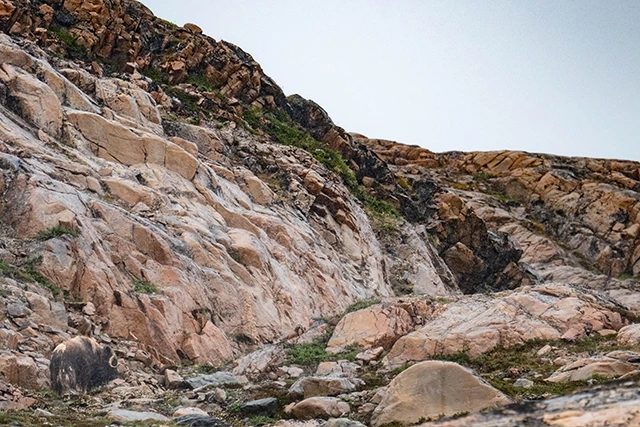 One of the largest members of the bovid family, the musk ox is a true Arctic specialist with an incredibly thick coat. They're now only found across a fraction of their former range, primarily across Greenland and northern Canada, while there have been a number of reintroductions across northern Europe and in the Russian Arctic.
Musk oxen live in herds, which are typically larger in winter, with young males ejected by the dominant bull in the summer. The biggest threat to these large mammals is the changing environment, while their only natural predator (other than man) is the Arctic wolf.
Weighing more than half a ton, these are the largest herbivore found in the Arctic Circle. They can live up to 20 years.
Birds of the Arctic
There are a staggering number of birds that both live and visit the Arctic each year. The resident birds are particularly hardy, while the migrants make the most of the short summer season to raise their young when a glut of food becomes available.
Arctic terns
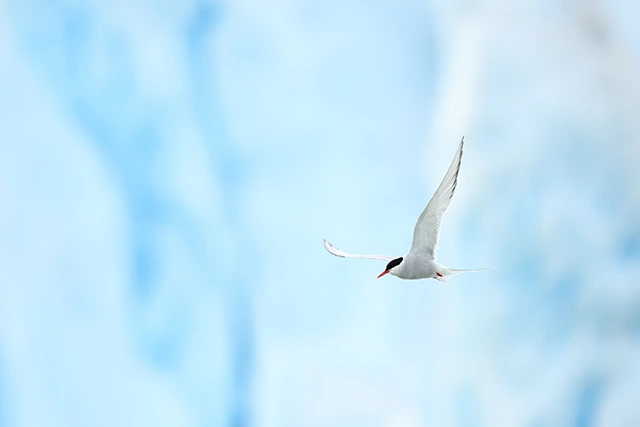 The Arctic tern is famed for its epic annual migration. Each year, these elegant seabirds fly from Antarctica all the way up to the northern reaches of our planet to breed. Their migration is the longest known of any bird in the world, travelling up to an incredible 88,000 kilometres on the wing each year. What's even more remarkable, is that with a lifespan of up to 30 years, they can easily make this journey over 20 times in a lifetime. Quite simply, they're remarkable birds.
It's worth noting that Arctic terns are very attentive parents and if they think you're a threat to their young, they'll dive bomb with some ferocity. The terns will make their nests on the ground and can be vulnerable to predation from Arctic fox and polar bear, while people can accidentally disturb them. Therefore, do your best to avoid any colonies during the Arctic breeding season, this means they don't have to waste precious energy defending their nest and chicks.
Ivory gull
 A true Arctic specialist, the ivory gull spends its entire life in the frozen realm of the north. As well as feeding on small marine creatures, such as fish and squid, it's best known for its scavenging of seal carcasses (from polar bear kills). One of the most fascinating things about the ivory gull is that they have a specific call for when it sees a predator such as an Arctic fox or a polar bear.
It's thought they can live up to 30 years, with some known individuals reaching the age of at least 28 years old. Therefore, it's not known just how susceptible they are to the rapidly warming climate in the Arctic. The ivory gull is at risk due to these changes in its delicate environment and who knows what they future holds for these beautiful birds.
Snowy Owl
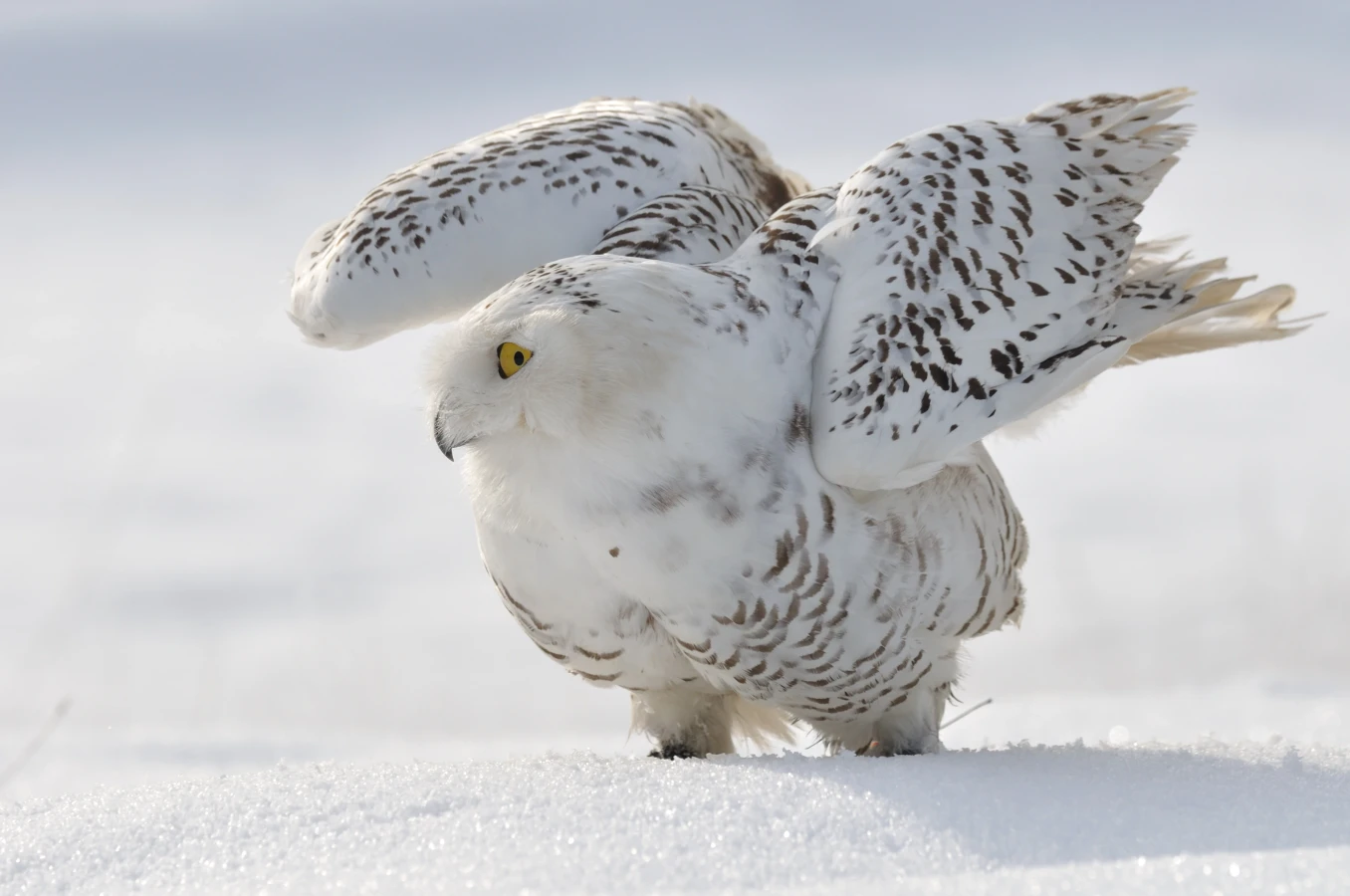 One of the most beautiful birds of the Arctic, these magnificent birds of prey are incredibly hard to see. Although their distribution is widespread, they're transient and rarely inhabit the same areas from one year to the next. Mostly found across the Canadian Arctic, Greenland and across the far north of Europe and Russia.
They move to where there's food, and so each year the distribution changes. Nesting on the ground they're vulnerable to disturbance, but they're fiercely protective of their nests and chicks.
Our Trips to the Arctic
We offer a range of trips to the Arctic which allow for unrivalled views of some of the most sought after Arctic animals. Whether you're interested in travelling to Canada, Greenland or Svalbard, we sure to have something to whet your appetite.
Join us on a small ship charter as we explore the Svalbard archipelago and search for the area's wealth of Arctic wildlife. Expert leader Helen Bryon is on hand to share her knowledge and her infectious enthusiasm as we hope to encounter iconic species such as polar bear, walrus, beluga, bearded seal and possibly even ivory gull.
If you're passionate about photogaphing wildlife and you dream of photographing some of the Arctic's most sought after species. Travelling at the start of spring and accompanied by expert photographer Bret Charman, the landscape is still covered in ice, allowing us to photograph in this pristine Arctic world. We hope to photograph Arctic fox, Svalbard reindeer, bearded seal, walrus and polar bear.
Venture to one of the world's wildest corners aboard a small ship and marvel at the awe-inspiring Arctic landscape and come across a range of species. The area is particularly reliable for seals, such as harp, ringed and even hooded seals, while we also hope to catch a glimpse of musk oxen, Arctic fox and if we're particularly lucky, it's possible to catch a glimpse of narwhal and polar bear.
The Canadian Arctic is famed for the Northwest Passage its associated tragedies, but there's much to discover in this remote wilderness. Despite being a polar desert, the landscape here supports an amazing diversity of Arctic animals. Polar bears here are common, although shy, but it's the vast bird colonies and opportunities to see beluga and narwhal that make this trip like no other.
I wrote a day-to-day account of the Northwest Passage cruise I travelled on, should you wish to find out more.
Discover all our holidays to see Arctic animals or to find out more, speak to our team of wildlife experts.